The shift towards renewable energy is gaining momentum in India, and rooftop solar installations are leading the charge. With rising electricity costs and growing environmental concerns, homeowners and businesses are increasingly considering solar power. But before making the switch, it’s crucial to understand the Rooftop Solar Installation Cost in India, available subsidies, and potential payback period.
What is Rooftop Solar Installation?
Rooftop solar installation refers to the setup of solar panels on residential or commercial rooftops to generate electricity. The system can either be grid-connected, feeding excess electricity to the grid, or off-grid, storing energy in batteries for later use. These installations not only reduce electricity bills but also contribute to a sustainable environment.
Factors Affecting Rooftop Solar Installation Cost in India
The cost of rooftop solar installation in India varies depending on several factors:
-
System Size
The size of the solar system, measured in kilowatts (kW), directly impacts the cost. Residential systems typically range from 1 kW to 10 kW. -
Type of Panels
Monocrystalline panels are more efficient but slightly costlier, while polycrystalline panels are budget-friendly. -
Inverter and Battery Costs
A good-quality inverter is essential for grid-connected systems, while off-grid setups require batteries, which add to the cost. -
Installation Charges
Labor, mounting structures, and other components can vary based on location and company expertise. -
Location
Prices may differ across Indian states due to transportation, taxes, and local policies.
Average Rooftop Solar Installation Cost in India
Here’s a general breakdown of costs for residential rooftop solar systems in India:
| System Size | Approx. Cost (Before Subsidy) |
|---|---|
| 1 kW | ₹50,000 – ₹60,000 |
| 3 kW | ₹1,50,000 – ₹1,80,000 |
| 5 kW | ₹2,50,000 – ₹3,00,000 |
| 10 kW | ₹5,00,000 – ₹6,00,000 |
Note: These costs are indicative and may vary depending on quality, location, and installer.
Government Subsidy for Rooftop Solar
The Indian government promotes rooftop solar adoption through subsidies under the Ministry of New and Renewable Energy (MNRE). Homeowners can avail of:
-
30% Subsidy for Residential Systems (up to 3 kW) in most states
-
Accelerated Depreciation Benefits for commercial setups
-
State-specific Incentives which may vary
Subsidies help reduce the initial investment significantly, making rooftop solar more affordable.
Payback Period for Rooftop Solar
The payback period depends on system size, electricity consumption, and solar generation. On average:
-
Residential 3 kW system: Payback in 4–6 years
-
Residential 5 kW system: Payback in 5–7 years
-
Commercial 10 kW system: Payback in 3–5 years
After this period, the electricity generated is essentially free, leading to substantial savings over the system’s 20–25 year lifespan.
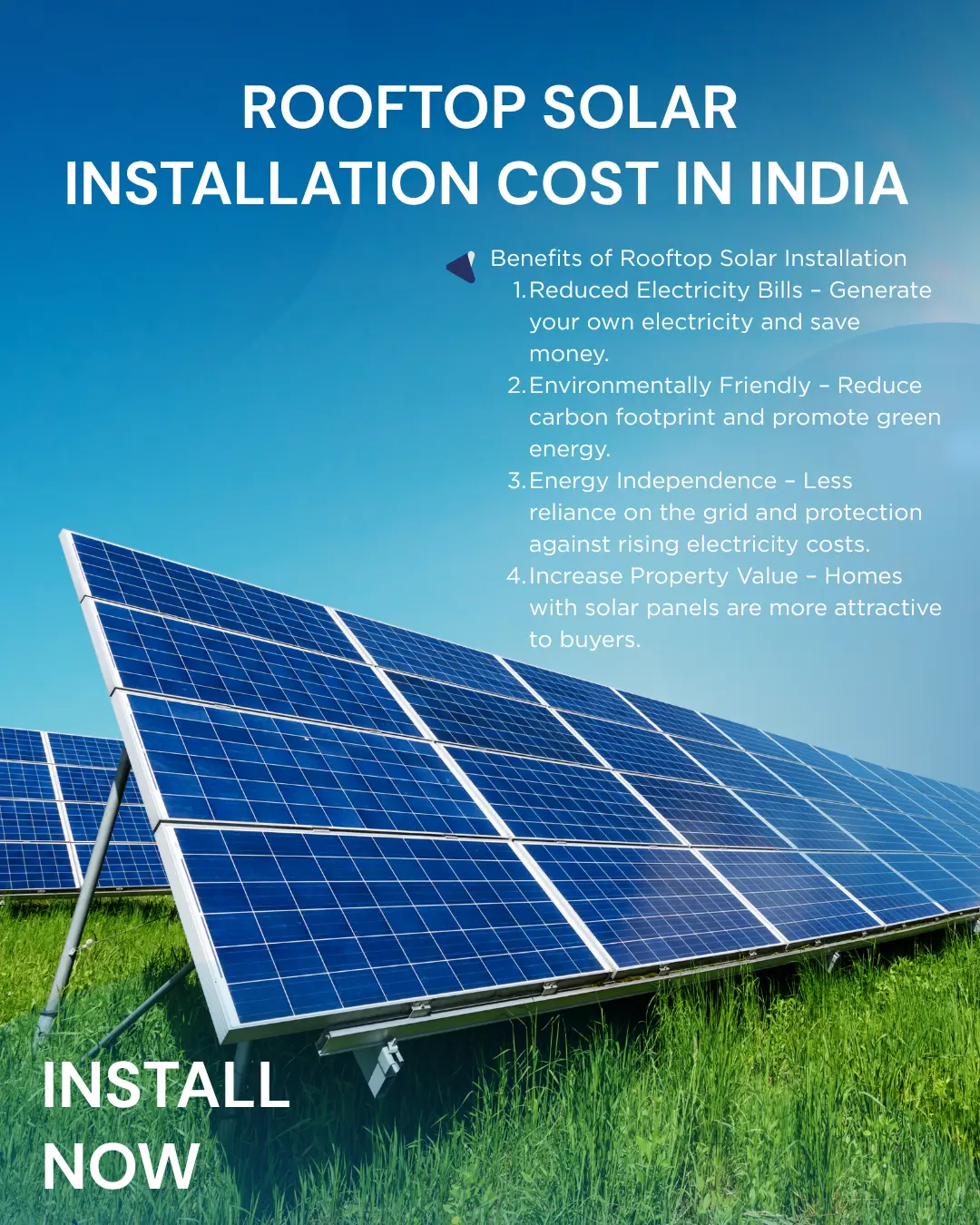
Benefits of Rooftop Solar Installation
-
Reduced Electricity Bills – Generate your own electricity and save money.
-
Environmentally Friendly – Reduce carbon footprint and promote green energy.
-
Energy Independence – Less reliance on the grid and protection against rising electricity costs.
-
Increase Property Value – Homes with solar panels are more attractive to buyers.
How to Get Started
-
Assess Your Energy Needs – Calculate your average monthly electricity usage.
-
Choose the Right System – Select panel type, system size, and inverter/battery requirements.
-
Check Subsidy Eligibility – Apply for government incentives to reduce upfront costs.
-
Hire a Certified Installer – Ensure professional installation for optimal performance.
-
Monitor Performance – Track energy generation to maximize savings.
Switching to solar energy is not just an investment in your home but also in a cleaner, sustainable future. Understanding the Rooftop Solar Installation Cost in India, subsidies, and payback period helps homeowners make informed decisions and enjoy long-term savings.
Focus Keyword Usage: The keyword “Rooftop Solar Installation Cost in India” is naturally included in the title, headings, and throughout the content for SEO optimization.
If you want, I can also create a meta description, SEO tags, and internal linking strategy to make this blog fully optimized for Google ranking.
Do you want me to do that next?